

Ramadan Sunsets

February 25, 2026
“Ramadan is not only to stay thirsty and hungry; it is also to realize the real thirsty and hungry ones to help; it is true worship.”
― Ehsan Sehgal
So last night was the beginning of Ramadan here in Egypt. For those that are not aware, Ramadan is the holiest month in the Islamic calendar — a sacred time of fasting, prayer, reflection, and community for Muslims around the world.
It marks the month when the Quran was first revealed to the Prophet Muhammad by God through the Angel Gabriel. Because the Islamic calendar is lunar, the dates of Ramadan change each year, moving about 10–11 days earlier annually.

During Ramadan, Muslims fast from sunrise (Fajr) to sunset (Maghrib) — refraining from food, drink, smoking, and sinful behavior. The fast is broken each evening with a meal called iftar, often starting with dates and water, followed by dinner. The pre-dawn meal before fasting begins is called suhoor.
That is about all I know about it being a non Muslim. Last night we went to dinner at the first reliable place we found for good food and service near our hotel. It is a cafe right on the Nile River with excellent, well prepared Middle Eastern Cuisine.


Colleen had Bamya bel Lahma - an Egyptian beef-okra stew dish that is nutritious and bursts with bold Egyptian flavors. I had a grilled fish fillet. The night before we ate here as well and were introduced, in my view, to the tastiest thing so far - an Egyptian white bean stew known as Fasoulia beeda. There was one of the many cats here, who jumped into my lap over and over again wanting bits of my plate.

When we were finished we walked along the harbor path in front of The Winter Palace Hotel - an old British colonial era building converted into an upscale hotel. We had to run through the usual gauntlet of young men trying to lure us out for a boat ride or sell us some trinket. At least a dozen men and a couple of women approached us and some would follow us continuing to solicit services.


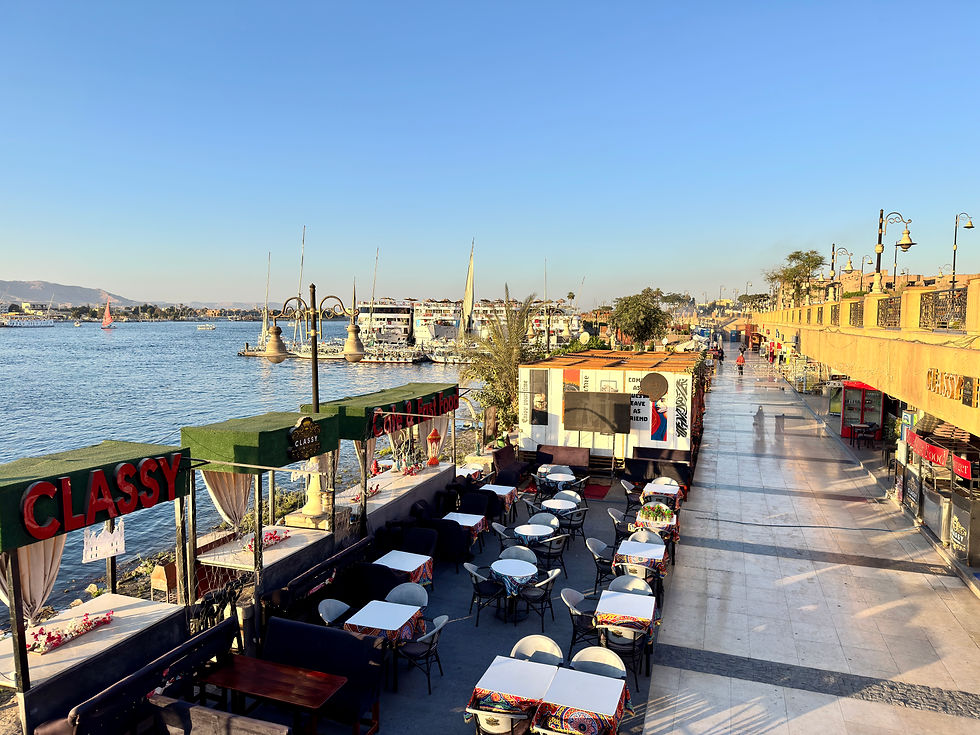
Outside our restaurants several men were arguing with raised voices threatening violence with each other ( according to our waiter) in a fight over who saw which tourist group first.
We walked on. The lights that highlight the Luxor Temple were turning on as the sun was setting and dusk was settling in. We were about 2 miles from our hotel so we needed to find a way back. It was tempting to return to the docks and the battling sail boat solicitors, but it seemed too exhausting.
Another common tourist transportation are the many horse and buggy carriages that work the streets. The horses often seem thin and it tugged at us a little as to whether or not we should employ one. But we met yet another charming hustler who spoke good English and lured us to a more elegant carriage for a reasonable rate.
The carriage was driven by an elderly man wearing a dusty dark grey galabiya and a light purple turban. We climbed aboard. After being taken to yet another hustle site of a “Market” that the young man gets a cut if we buy anything we moved on towards home. The young hustler left us to the older man and we clopped down the streets towards the hotel.

As evening began, people were all over the streets. He maneuvered the carriage in and out of traffic calling his horse “My Ferrari”.

At several stops there were groups of young men carrying baggies of liquids and food. Our first thought was they were going to try to sell us something. They paid no attention to us. It was the first night of Ramadan and as part of the idea of public service central to the meaning of the holiday, people come out into the streets to give food and drink to workers who cannot be home right now to break their fast. The driver smiled through his thin white beard happy to receive the gifts. He offered us some as well.
We made it home happy to witness a moment of generosity and kindness from this beautiful, old and, at times, bewildering culture.


Comments