

Shrines & Temples

October 13, 2025
“Life is like a long journey carrying a heavy burden - there is no need to rush”
Lord Tokugawa Ieyasu from The Testament of Ieyasu
We left Tokyo by train for an excursion 2 hours north to the foothills of the Japanese Alps. Japan has large mountains that run through the middle and west of the country. Most, if not all, are volcanic in origin.

We traveled there via a futuristic train called the SpaciaX. No, it is not the famed bullet train, that will come later, but it may as well have been. The front of the train is a cockpit with big windows and comfortable living room like chairs. The forward wall is glass exposing the engineer compartment so you can see where he is driving. Very smooth and comfortable.


Our destination was Nikko, a mountain resort town well known for beautiful shrines and a resort lake. Our first morning we set off to see the shrines that were listed as UNESCO world heritage sites. We are going to see A LOT of shrines on this trip. It is similar to when you go to Europe and marvel at the great cathedrals. However, if you are anything like me you find the difference between “Shinto Shrines” and “Buddhist Temples” confusing. Here is some context to help understand and appreciate the differences (This is the Cliff Clavin trivia section - feel free to skip down if you find it too dull). I have included images from a wonderful nearby waterfall to help break up the facts.

—————————— (Begin Cliff Clavin Section)
Anyone who has ever visited Japan can attest that the place is full of shrines and temples. Yet to a Western eye theses beautiful structures can seem all part of the same thing, a dense Asian belief system that all appears similar. They are not.


A common saying here is that Japanese are born Shinto and die Buddhist. To be clear, a “Shrine” is almost always a Shinto house of worship, where a “Temple” refers to a Buddhist center.
For Japanese, Shintoism mainly deals with the concerns of this life including rites of passage, building a community, and asking for blessings from the “Kami”. In a general sense it is a form of animism.


Kami are defined as , “Kami are sacred spirits or deities in Japan's native Shinto religion, encompassing natural elements like mountains and rain, powerful forces of nature such as thunder, living beings, and even human beings who become enshrined after death. Unlike the single, omnipotent creator in some religions, kami are numerous and diverse, interacting with humans through various mediums or symbols called yorishiro.”
Meanwhile Buddhism handles funerary rites and prepares people for the afterlife and beyond.


Although there appears to be some overlap, Shintoism has been argued to be the native religion of Japan since prehistory. Although it has been modified as centuries have past, fundamentally it still pays homage to veneration of nature and the numerous deities of Kamis that control it
Buddhism originated in northern India, specifically near present day Nepal in the 5th century BCE. From there it spread north and west through China and Korea. We have documents showing Korean monks officially brought Buddhism to the Yamato imperial court in Japan in 552 CE

At first local Japanese treated Buddhism as simply foreign Kami’s. As the centuries past the process of shinbutsu-shugo - the melding of the two disciplines has occurred leading to the present majority of worship here. Of note, only about 1.4% of the population practices Christianity. Yet even this western tradition embraces notes of the veneration of nature as well.
"For since the creation of the world God's invisible qualities—his eternal power and divine nature—have been clearly seen, being understood from what has been made, so that people are without excuse”. - Romans 1:20
As the centuries have gone on, like all major faiths, there have been various evolutions, refinements, and changes in doctrines that define the Shinto and Buddhist relationship. Today, there appears to be a relative harmony here between the two disciplines each serving the population for different reasons and at different stages in there lives.
Suffice to say, a visit to these sites of worship invoke feelings of reverence and a deep appreciation for the wonders of the living world.

—————————— (End Cliff Clavin Section). “Your welcome”
This is the beautiful Shin-kyo bridge suspended over the Daiya river. Legend has it that this is the spot that the monk who introduced Buddhism here, Shodo Shonin, was carried across the river by two giant serpents.

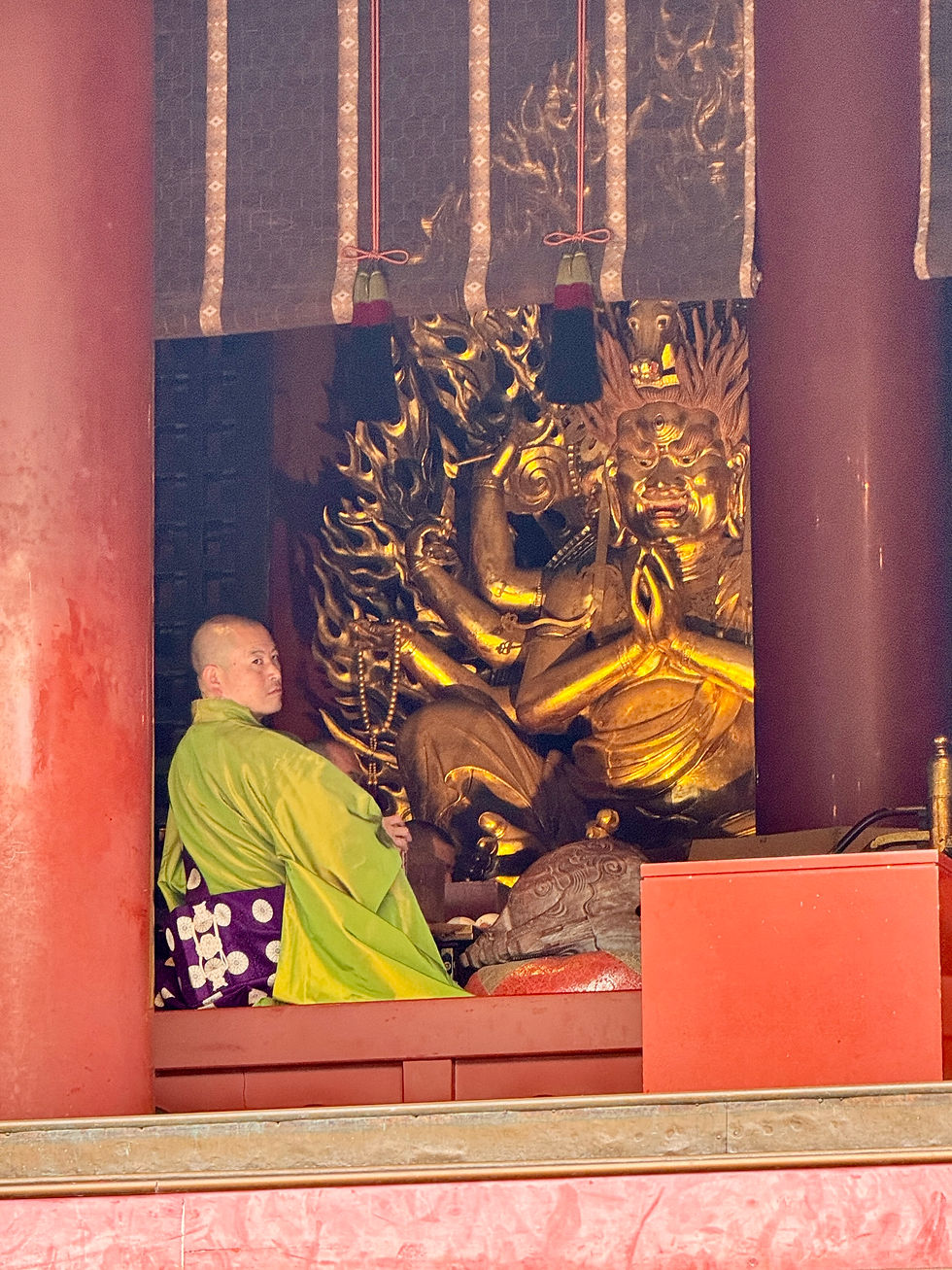
The first thing that greets you climbing the hill is the Rinni-Ji Temple. This ornate Buddhist temple was built here in 848 CE and over the centuries has been restored many times. We were unable to photograph inside so some of the interior shots are from Google.


Surrounding the site were incense wells, gardens, supportive Shinto Shrines offering protection.


Here we find a 400 year old cherry tree that still produces fruit!

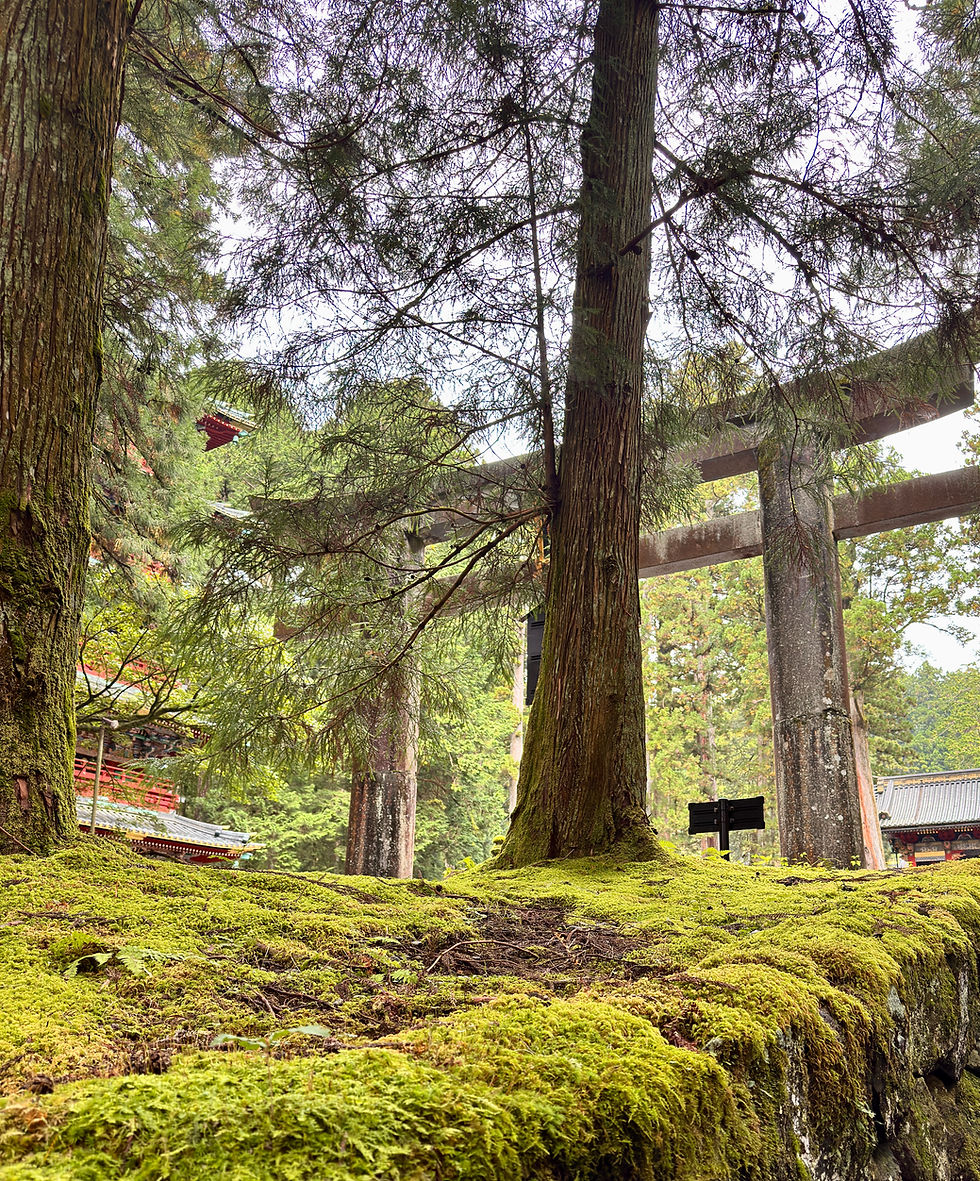
We climbed further to the star attraction - The Tosho-gu Shrine.
Most of us remember the famous novel Shogun by James Clavell. It was recently made into a very popular miniseries. The plot revolves around a feudal Japanese warlord’s rise to power.

The plot was loosely based on the life of Tokugawa Ieyasu. Below is what he really looked like, at least as a painting.

His primary acclaim was he defeated rival clans and assumed absolute power as the ruling Shogun in 1603. This step ushered in the Edo period lasting 268 years. For the first time the country was united and enjoyed relative peace and prosperity during this period. Because of this, he is revered as an important historical figure here.


This fabulously ornate shrine is his final resting place. Tokugawa died at the age of 73 in 1616 and his body was interned here in 1617.


It has never been moved in all that time.


Comments