

Bullet Trains, Wasabi Farming, & Crow Castles

October 16-17, 2025
“Don't dunk your nigiri in the soy sauce. Don't mix your wasabi in the soy sauce. If the rice is good, complement your sushi chef on the rice.”
-Anthony Bourdain
Bullet trains are extraordinary technological marvels. Through very powerful magnets they levitate on tracks achieving frictionless propulsion and astounding speeds. They can cover distances normal trains take in 1/3 of the time. Japan has pioneered this technology and leads the world in high speed train travel. In all their long history there has never been a single accident or fatality with them.

And it was our turn to go on one. What is it like?


There are three things you notice right away. Despite their great speed they are much quieter than a regular locomotive. The second thing you notice is they are very smooth to ride on. Although you feel the incline of the land, you do not feel the rocking bumps one experiences with a regular locomotive. It is so fast, objects whiz by the window while you feel like you are gliding. The final thing is they are very, very punctual. I mean down to the second. They do not linger long at the station so when it is time to get on, you better be ready.
We were heading for Matsumoto. But first, we needed to change trains at Nagano. So we took the opportunity for a quick stop there.


Nagano was the site of the 1998 Winter Olympics. Nestled high in the Japanese Alps, it is a medium size city. It is the place you travel in the winter to see the snow monkeys lounging around in a hot pool. They are not here this time of year. Apparently they summer in Puerto Rico and have not yet returned.


However the Zenko-JI Temple is here. It is one of Japan’s oldest founded here in the 7th century. According to legend the first Buddha statue ever brought into Japan in 552 is housed here. You can’t see the original, only a copy. Once again, you are not allowed to shot pictures inside the temple, so I have included a Google Archive picture.

The grounds were lovely and made for a nice break before returning to the train station for Matsumoto.


Before we depart, I should explain this emblem. This is not what you think it is. Lets go again to our correspondent Cliff Clavin for an explanation.

“Cliff”?
“The swastika (卍 or 卐) you often see at Buddhist temples is an ancient sacred symbol that predates its later misuse in the 20th century. In Buddhism, it has nothing to do with Nazism — its meaning is entirely different and deeply spiritual.
Here’s what it represents in the Buddhist context:
Symbol of good fortune and auspiciousness , represents the Buddha’s teachings – It often symbolizes the Dharma, the eternal truth of the Buddha’s teachings, mark of the Buddha’s footprints or heart, and the symbol of eternity and harmony – The rotating arms suggest the eternal cycle of life, death, and rebirth”
“Thanks Cliff”

Back to the train station. This train, while clean and efficient, was no bullet train and felt like a pick up truck on a dirt road in comparison.
We arrived in Matsumoto late that afternoon and checked into a nearby hotel. In truth, we took a Japan mental break and reveled in a new Survivor episode and Top Chef reruns.


Refreshed by the vacuous entertainment we set off today with two adventures in mind. We had read about seeing wasabi farms during our trip planning. Wasabi is of course the little dollop of horseradish like condiment we find on sushi and other asian dishes in the U.S. It turns out, none of that is real wasabi.

Wasabi is a large horseradish like plant that is difficult to grow and requires certain conditions to thrive. It is also expensive. So the little green dollop we have been getting is in fact horseradish, some mustard, maybe some wasabi dust, and green food coloring.

Real wasabi, while still hot, is milder, with more nuanced and complicated notes. It also deteriorates quickly. So, unless the chef grinds the wasabi in front of you at the time, you are not getting wasabi.
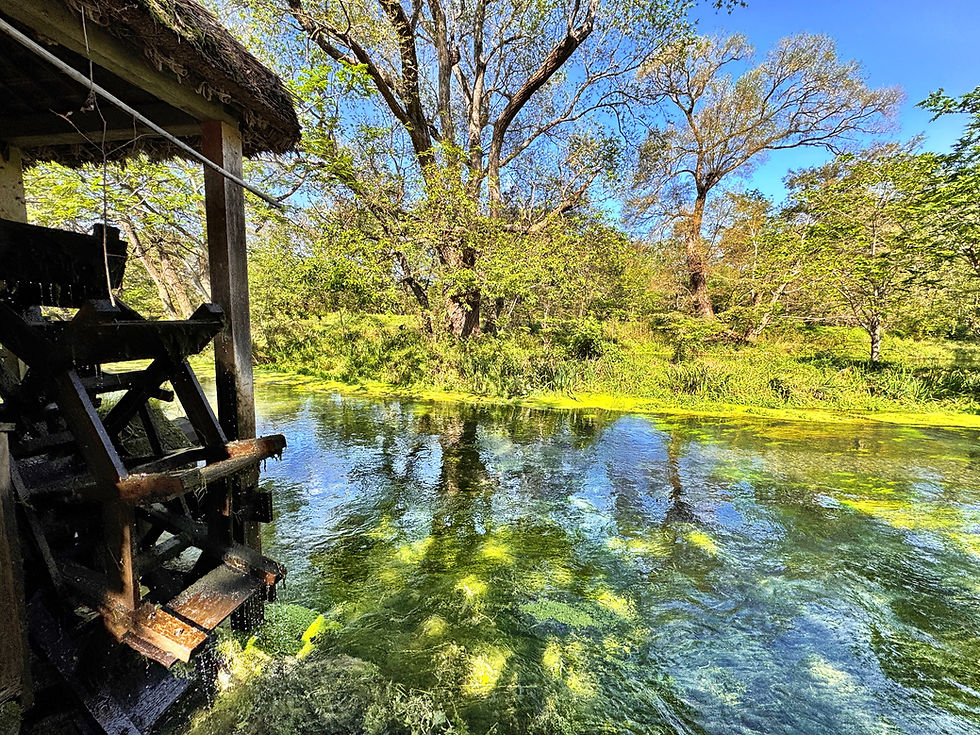
Despite all that condiment info, the day was bright and clear for once. So we took a small train out of town to a rural area and rode bikes through Wasabi fields. One of the reasons the wasabi is so special here is the crystal clear spring fed water that comes form an aquifer here. Its beautiful, cold, and very refreshing. The crop, like rice, has to be grown partially submerges and the farmers reroute the Hotaka river in a series of ingenious canals to feed the crop rows.




After enjoying wasabi ice cream we rode back to the station for the train back to Matsumoto. Here in the center of the city is Matsumoto Castle, or “Crow Castle” due to it’s black coloring. This all wood masterpiece is one of only 4 surviving castles that remain in Japan from the Edo Period. It was completed in 1595 and most of the grounds remain intact.


The busy day ended with a sample of the future. We had a late meal at a small 6 stool family run Korean restaurant. The chef/woman owner was just opening her new business this week here in town. She was kind and chatty and eager for us to enjoy her dishes which she made in front of us.

Tomorrow, back to the train station and traveling further into the alps.


Comments