

Senso-Ji
October 15, 2025
"It is better to travel well than to arrive."
-Buddha
We returned to Northern Tokyo for a brief visit to the Asakusa neighborhood. We initially considered staying here during our Tokyo days but it is not on the main metro lines and would have taken too long to get to other locations we wanted to see. Still the unique nature of the area warranted a look before we left Tokyo for good.

Perhaps the most unusual site here is the Flamme d’Or. This huge yellow, well…”thing” was Designed by French designer Philippe Starck and completed in 1989. It sits atop the headquarters of the Japan beer company Asahi. This monument of a golden fire was supposed to represent the burning heart of Asahi beer and was inspired by the Olympic flame.

Unfortunately, once completed, locals looked at the shape and declared it looked like a “Golden Turd”. The epithet stuck and people traveled from all over the world to see the shining monument to defecation. The Asahi company, recognized the problem too late but instead of removing it took the insult in good jest and embraced it. They achieved the recognition they sought, just with an inglorious twist.
Nearby is the Tokyo Skytree Tower. This is the tallest freestanding tower in the world rising to 2,080 feet (712 feet taller than the World Trade Center building stood). It serves as a broadcast tower but also a major tourist attraction. Today was far too cloudy to visit. The view at the top would just be the inside of a cloud bank.


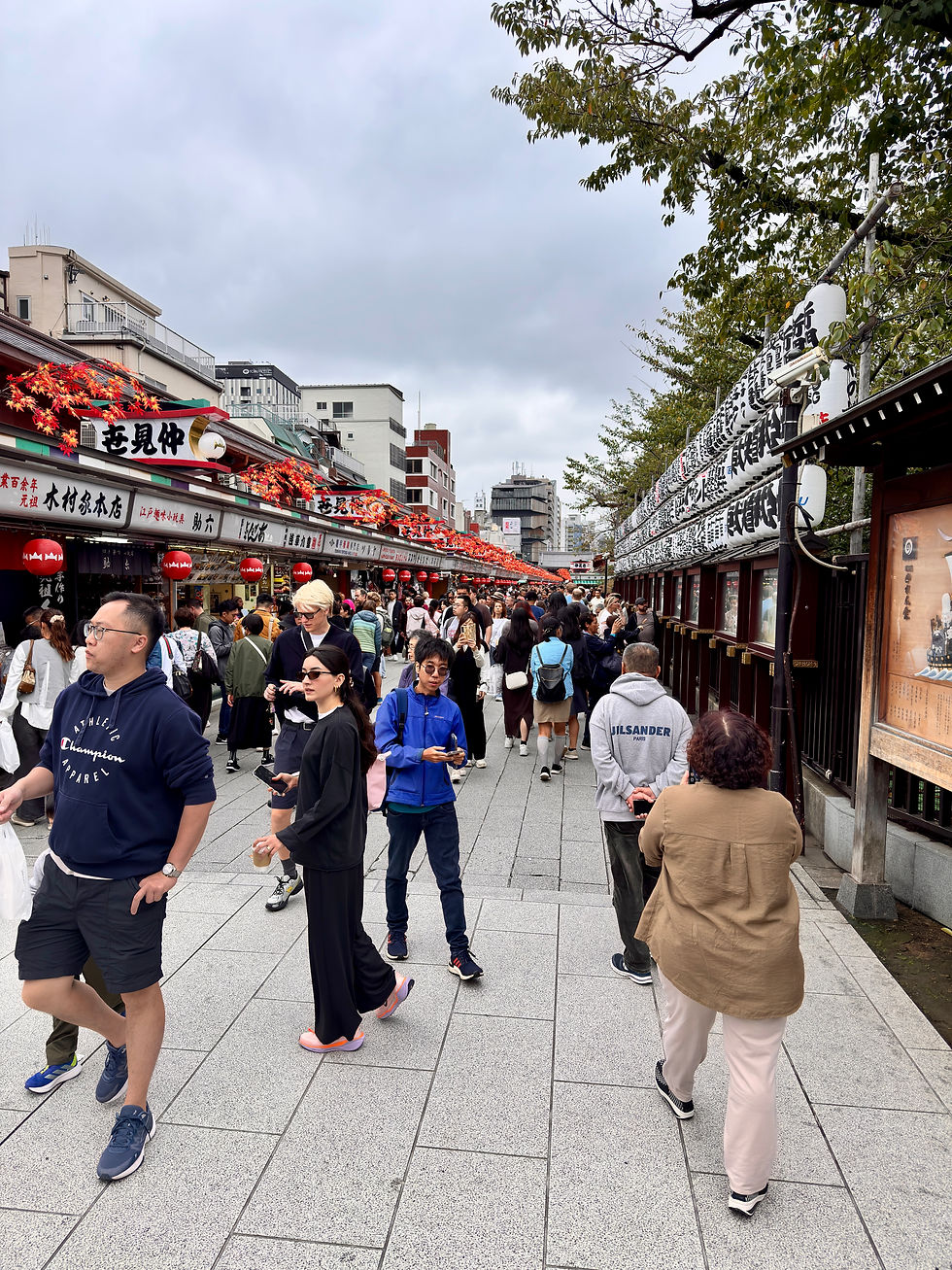
The Asakusa neighborhood streets are a large draw here. The lanes are narrower here and are lined with shops, restaurants of every stripe, and endless bars. They are piled on top of each other with lots of outdoor cafes, energetic rickshaw drivers, vibrant kimonos, and throngs of people from all over the world. It is easily the most atmospheric place we have visited in the city and strolling along with the crowd affords people watching of the highest order.


However, the main reason you come to Asakusa is the temple.

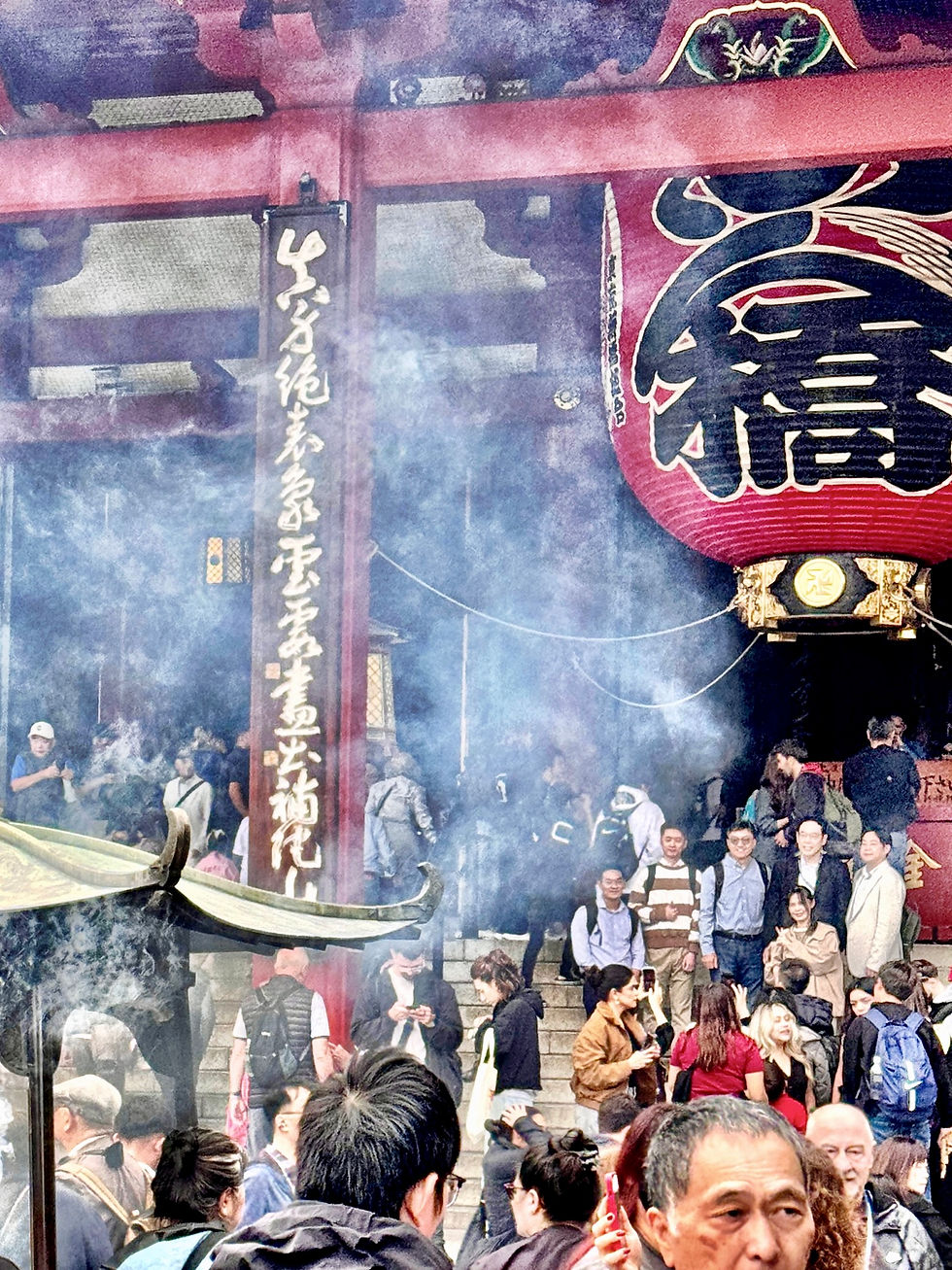
This is the home of the Senso -Ji Buddhist Temple. According to legend this place of worship has been here since the first century CE. Two brothers discovered a statue to the Goddess Kannon who is said to offer protection, healing, and mercy to those in need. The brothers took the statue to these grounds and started the first temple.


Over the centuries the temple has been destroyed and rebuilt many times. It has been expanded and modernized especially after its destruction by the U.S. firebombing raid of Tokyo on March 10, 1945.
Throughout these many upheavals the number of pilgrims to the site have only increased making it the largest Buddhist temple in the city. Some 30,000 people visit daily here.


Walking among the crowds it is difficult to determine who is a tourist and who is a worshiper. Many people are wearing traditional Japanese clothing and have come for a blessing or to seek their fortune in one of the many stalls that surround the plaza. Some petitioners seem fun and playful. Others are more tragic. One family brought a grievously disabled child to receive a blessing and look for a little hope. It was an odd thing to witness this family of pilgrims seeking impossible answers amongst all the chattering tourist crowds with ubiquitous iPhones in hand.
The ground houses a spectacular five story pagoda. Pagodas are mainly used by temples as a sacred monument to inspire reverence. Religious relics are often housed inside. Pagodas have evolved over the centuries from Indian Stupas, which were mound shaped structures used to house religious items.

We left the temple grounds via the Nakamise-Dori street that was lined with souvenir shops and food stalls and passed under the Kaminarimon or "Thunder Gate”. Here was the huge red lantern that guarded the entrance and the subject of so many instagram posts.




We made our way back to the hotel for some mundane tasks of laundry and a little rest.
Tomorrow, a bullet train awaits.


Comments